
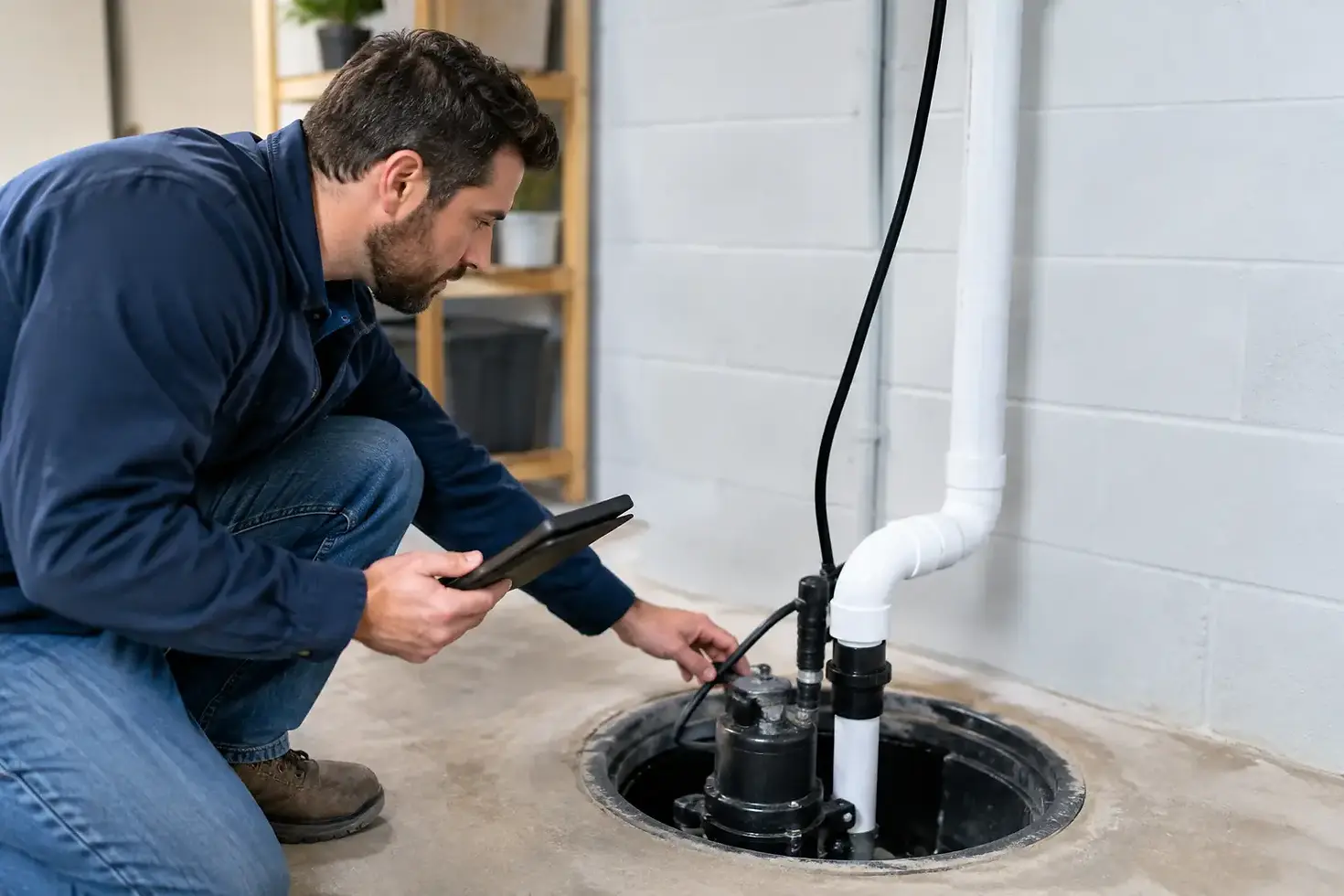
Sump Pump Testing Guide for Northbrook Homes
A sump pump can sit quietly for months, then become the most important appliance in the basement during one hard Illinois storm. That is why a practical sump pump testing guide should be part of regular home maintenance, especially for Northbrook-area homes with finished basements, older drainage systems, or a history of moisture.
Testing a sump pump is usually straightforward, but the goal is more than confirming that the motor makes noise. You want to know whether the pump turns on at the right water level, removes water effectively, sends it away from the foundation, and has a backup plan if the power goes out. A pump that runs but cannot discharge water properly may still leave a homeowner facing a costly cleanup.
Why Sump Pump Testing Matters
Sump pumps manage groundwater and stormwater that collect around a home's foundation. Water enters the sump pit through perimeter drains or surrounding soil, and the pump moves it through a discharge line to a location away from the house. When each part of that system works properly, it helps reduce the risk of basement flooding, moisture damage, mold growth, and damage to flooring, drywall, storage, and mechanical equipment.
The challenge is that sump pumps do not get much notice until conditions are already severe. Heavy rain, rapid snowmelt, frozen ground, and power outages often occur at the same time. A small issue that seems harmless on a dry day, such as a stuck float switch or a blocked discharge pipe, can become a major problem when the pump is needed most.
For most homeowners, testing in early spring is essential. A second check before fall storms is also wise. Homes with frequent water in the pit, a finished basement, or a single primary pump may benefit from more frequent checks.
Sump Pump Testing Guide: What to Check First
Before adding water to the pit, take a few minutes to look at the overall setup. Keep your hands clear of electrical components, and do not test a pump if its power cord, outlet, or wiring shows damage. If the pit is full and the pump is not operating, avoid reaching into the water. Contact a qualified plumber or electrician, depending on the apparent issue.
Start by confirming that the pump is plugged directly into a properly functioning electrical outlet. A sump pump should generally not rely on an extension cord or a power strip. If it is connected to a ground-fault circuit interrupter outlet, make sure the outlet has not tripped. Resetting a tripped outlet may restore operation, but it does not explain why it tripped. Repeated tripping deserves professional evaluation.
Next, remove the sump pit cover if it can be done safely and inspect the visible area. Look for dirt, gravel, leaves, or other debris that could interfere with the pump intake or float. The pump should sit upright and stable in the pit. A tilted pump can affect float movement and may leave water behind after a cycle.
Check the discharge pipe leaving the pump as well. It should be securely connected, and the check valve on the vertical pipe should be installed in the correct direction. This valve prevents discharged water from flowing back into the pit when the pump shuts off. A failing check valve can cause frequent cycling and unnecessary wear.
How to Test the Pump With Water
The standard test involves slowly pouring water into the sump pit. Use a bucket and add enough water to raise the float switch. Do not dump water in rapidly, particularly in a small pit, because you want to observe how the pump responds.
As the water level rises, the float should move freely and activate the pump. Depending on the pump style, the float may be a vertical component, a tethered ball, or an enclosed internal switch. Once activated, the pump should begin moving water promptly. Listen for steady operation rather than grinding, rattling, or unusually loud vibration.
Watch the water level in the pit. It should drop at a reasonable pace, then the pump should shut off once the float returns to its lower position. The exact timing depends on the pit size, pump capacity, and discharge line length, but the pump should not run continuously after the water has been removed.
While the pump runs, go outside and confirm that water is exiting at the discharge location. The outlet should direct water well away from the foundation, ideally onto a graded area where it will continue away from the home. Water that drains directly beside the foundation can cycle back into the perimeter drainage system and force the pump to work harder.
If water does not appear outside, stop the test and investigate carefully. The discharge line may be clogged, frozen, disconnected, or obstructed. In winter, exterior extensions can freeze if they are improperly installed or do not allow water to drain after each pumping cycle.
Warning Signs That Need Attention
A sump pump does not need to fail completely to create concern. Some symptoms point to a developing problem that can often be addressed before the next major rainfall.
Pay attention if the pump runs constantly, turns on and off every few seconds, makes loud noises, or leaves a high water level in the pit. Frequent short cycling may relate to a float problem, a failed check valve, or water returning through the discharge pipe. Constant running can indicate heavy groundwater conditions, a discharge restriction, a pump that is too small for the demand, or a float that cannot shut off.
A musty basement odor, moisture near the sump pit, stained walls, or water marks around the foundation are also worth investigating. A sump pump is only one part of a home's water-management system. Gutters, downspouts, grading, foundation drainage, and exterior drainage all influence how much water reaches the pit.
If your pump is older, do not rely on appearance alone. Many pumps have a service life of roughly seven to 10 years, though actual lifespan depends on quality, usage, maintenance, and local water conditions. A pump that operates during a quick test may still be nearing the end of its dependable service life.
Do Not Forget the Backup System
A primary sump pump depends on utility power, which is a concern during the same storms that can bring the most groundwater. A battery backup pump or water-powered backup system can provide an added layer of protection, but each option has limitations.
Battery backup systems need periodic testing, a healthy battery, and adequate capacity for the expected runtime. A battery may appear connected while no longer holding a useful charge. Follow the manufacturer's test procedure and listen for alarms that indicate a low battery, charging problem, or pump fault.
Water-powered backup pumps do not require electricity or batteries, but they require sufficient municipal water pressure and are not appropriate for every plumbing setup. They also use household water while operating. For some homes, a standby generator may support the primary pump during an outage, but it must be properly sized, safely connected, and maintained.
The right backup approach depends on the home's flood risk, available utilities, finished basement value, and how quickly power is typically restored in the area. There is no single solution that fits every property.
Keep the System Ready Between Tests
A clear pit and a clear discharge route make routine testing more meaningful. Keep stored belongings away from the sump area so the cover, outlet, and pump remain accessible. Check that exterior discharge extensions are secure and that landscaping, mulch, soil, or snow is not blocking the outlet.
It also helps to test the alarm, if your system has one. A high-water alarm cannot remove water, but it can give you time to respond before water reaches the top of the pit. For homeowners who travel often or have a finished lower level, a monitored water alarm may offer additional peace of mind.
During an annual home maintenance inspection, Midwest Inspect can identify visible conditions around the sump pump, drainage, and basement that may warrant further evaluation. A home inspection does not replace specialized repair or installation work, but clear findings can help you prioritize the next step.
A five-minute water test on a dry day is far easier than reacting to a rising water line during a midnight storm. Put the test on your seasonal maintenance calendar, and address small concerns while you still have time to choose the right repair.


Comments